
Last updated November 21, 2026
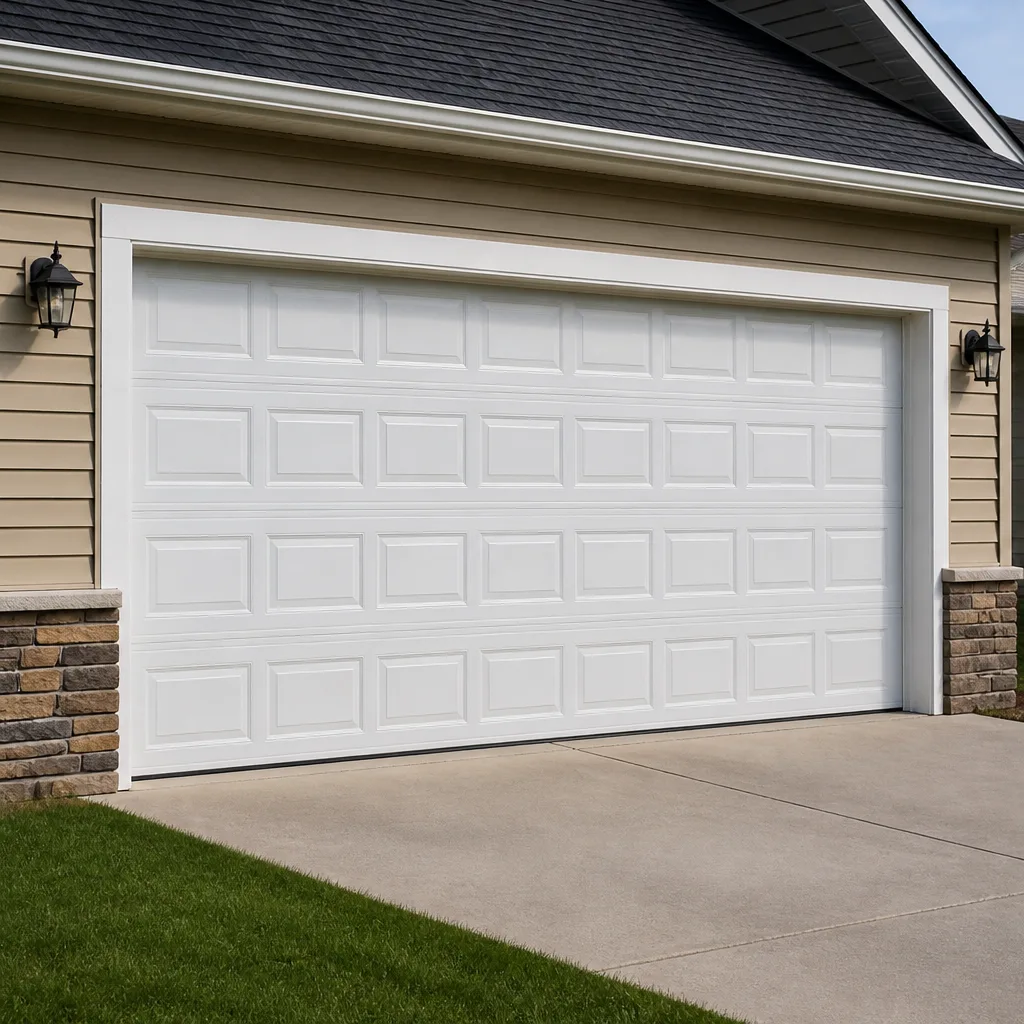 Raised-panel steel
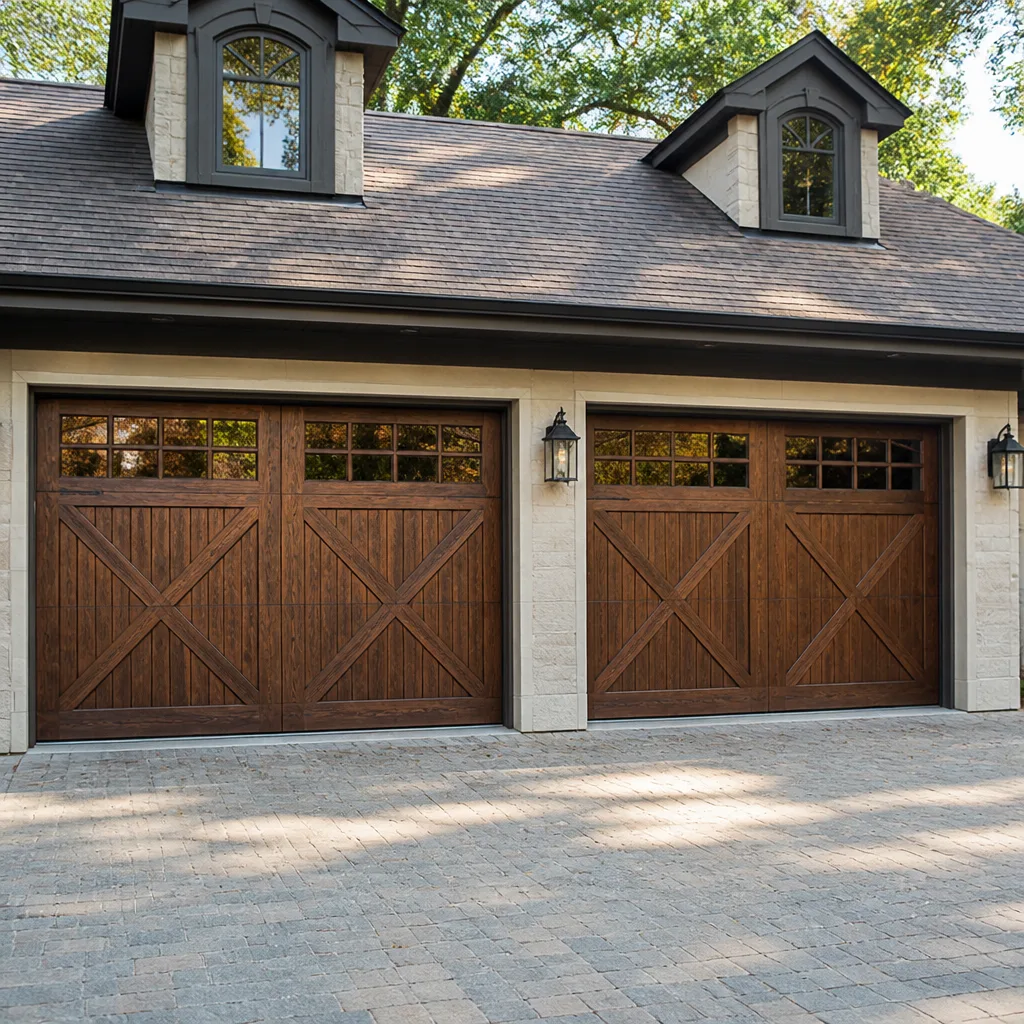 Carriage house
 Modern flush
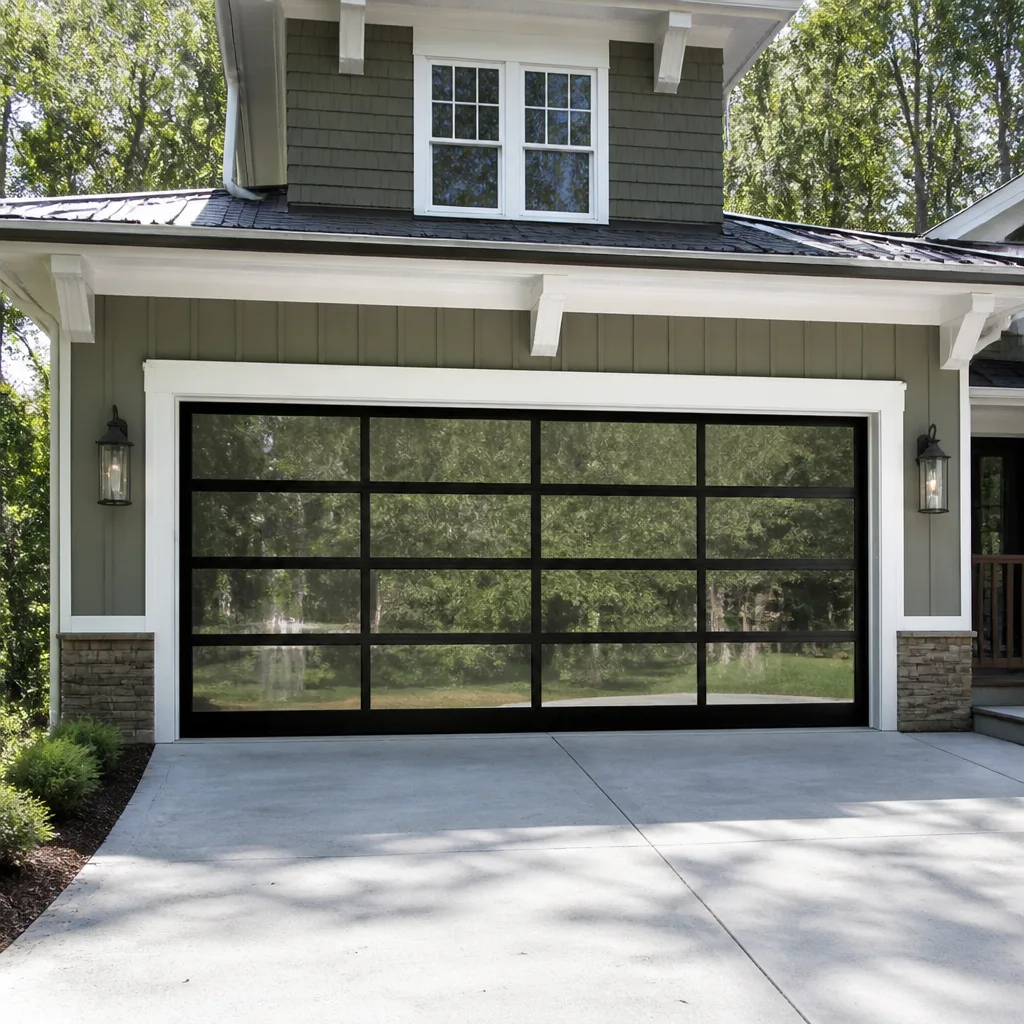 Full-view glass
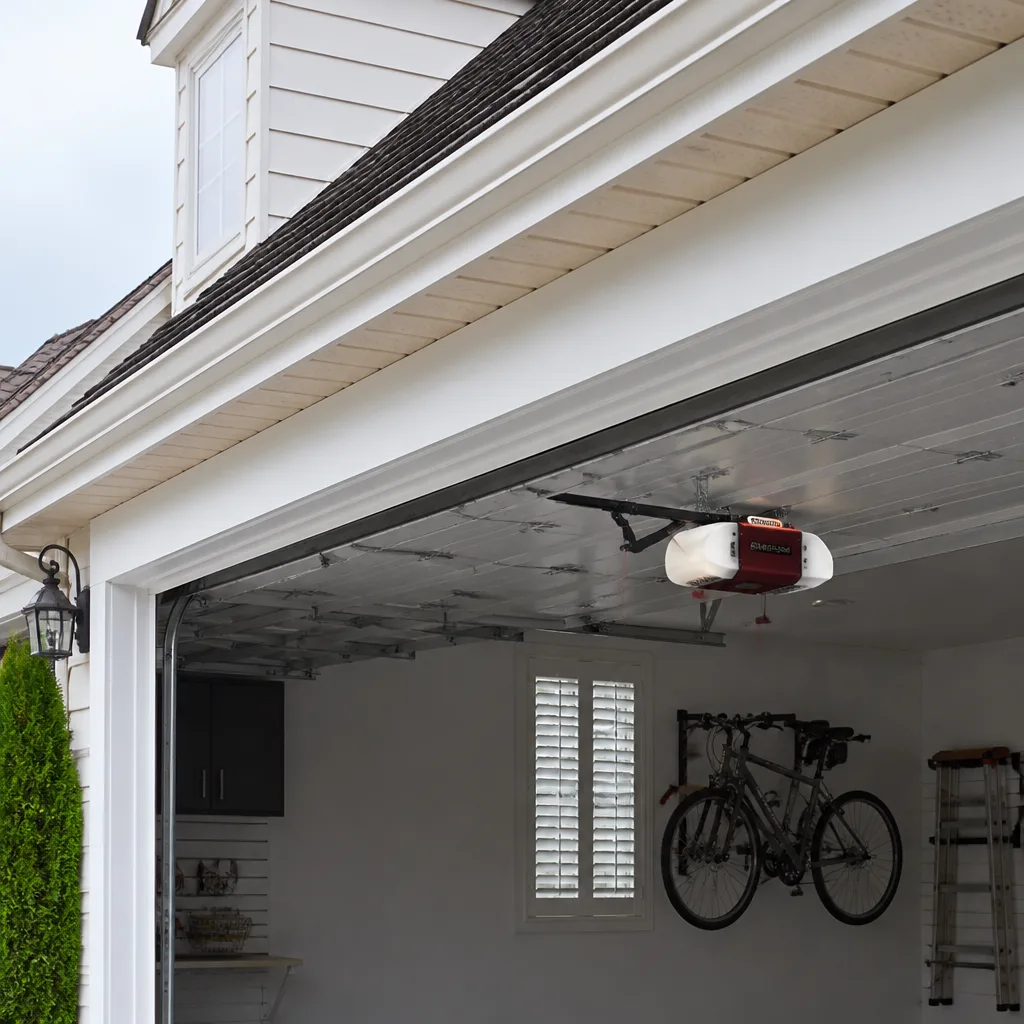 LiftMaster openers
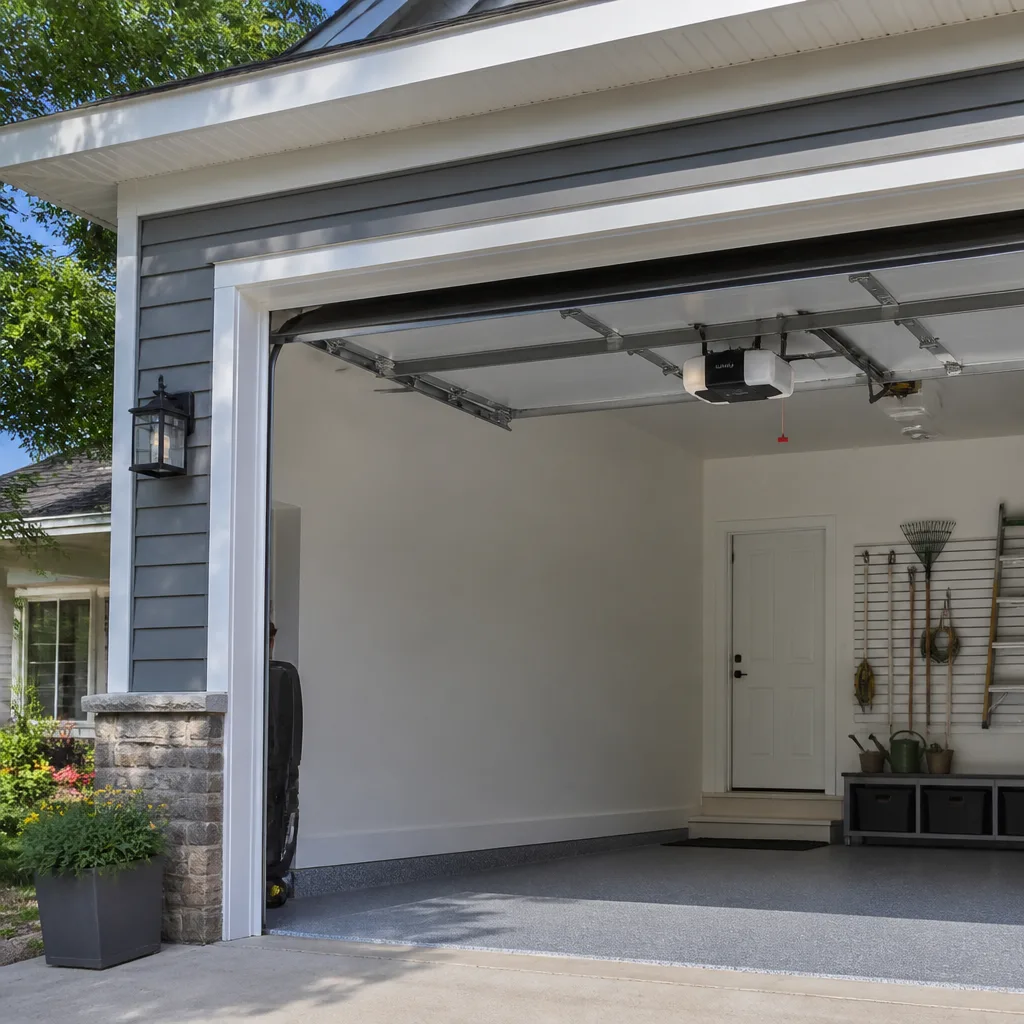 Chamberlain openers
Full 25-point door and opener safety check with every visit - springs, cables, rollers, tracks, and your LiftMaster or Chamberlain opener included
You get a price before we start. It does not change when the pro arrives.
Get your free estimateGarage Door Warning Signs: A Parkchester Homeowner’s Reference Guide
Most homeowners treat a garage door like a light switch: it works until it doesn’t. That framing is the reason so many failures feel sudden. In our experience, they rarely are. A door almost always warns you first, and the warning usually starts small, a two-second hesitation before the door lifts, a dull thud at the end of the close, a roller that squeaks on one side only. Those early signs are a repair window. Miss them and the same problem turns into a snapped spring, a dropped door, or a cable that lets go. This guide is written for Parkchester homeowners who want to read those signals early, decide which ones mean schedule a repair and which ones mean stop using the door today, and get an accurate phone estimate before anyone arrives.
Quick Answer
A garage door in trouble usually shows three kinds of warning signs at once: visual (sagging panels, frayed cables, rust at the bottom brackets), auditory (popping, grinding, a bang at the end of travel), and operational (sluggish starts, reversal before the floor, uneven lifting). If you see a frayed cable or hear a loud snap, stop operating the door and call a professional. For slower signs like squeaks and uneven travel, schedule a repair. Our technicians have up to 15 years of experience reading these patterns, and we handle them across virtually every major brand.
Styles & brands we work with
- Raised-panel steel
- Carriage house
- Modern flush
- Full-view glass
- LiftMaster openers
- Chamberlain openers
Table of Contents
- Visual Warning Signs: What to Look For Before You Touch the Door
- Auditory Warning Signs: What the Sounds Are Telling You
- Operational Warning Signs: When the Door Hesitates or Travels Unevenly
- The “Stop Using It Today” Threshold: Signs That Mean Immediate Risk
- Opener Problem or Door Problem? How to Tell the Difference
- Warning Signs Specific to Older Parkchester Door Hardware
- How to Document Warning Signs Before You Call
- The Repair Window: When to Schedule, When to Wait
Visual Warning Signs: What to Look For Before You Touch the Door
Visual signs are the easiest to check because they don’t require the door to be moving. Walk up to a closed door, look at it from the outside, then from the inside, and follow these checks in order. This is what our technicians look at first when they arrive in Parkchester.
- Cable condition. Look at the two cables running along the sides of the door, from the bottom bracket up to the drum at the top. A healthy cable is taut and even. A cable with visible fray, loose strands, or kinks is a stop-now signal.
- Bottom brackets. These are the metal plates where the cables attach at the bottom corners. Look for rust, cracking, or a bracket that’s pulling away from the door panel. Corroded bottom brackets are one of the most common wear points in older homes.
- Springs. The torsion spring sits on a metal shaft above the door. Visible gaps in a torsion spring, or a spring that looks stretched and unbalanced, means it’s approaching failure. On extension-spring systems, look for a spring that’s noticeably longer than its twin.
- Panel alignment. Stand back and sight along the bottom edge. If one end sits lower than the other, or a panel looks bowed, the door isn’t tracking correctly.
- Track and rollers. Look for track dents, loose bracket bolts, and rollers with flat spots or worn stems.
- Hinge wear. Nylon hinges dry out and crack over time. Any visible cracking on a hinge body is worth flagging.
If this is the first time you’ve looked closely at your hardware in a while, a garage door repair visit is a reasonable next step. We work on virtually every major brand, so brand familiarity is rarely a barrier when we’re diagnosing.
Auditory Warning Signs: What the Sounds Are Telling You
Garage doors are among the loudest appliances in a home, so homeowners naturally tune out the noise. But the sounds a door makes carry real diagnostic information. A working door has a low, steady hum from the opener and a soft, even roll of the rollers in the track. Any sound outside that baseline is a signal.
- A single loud bang. This is almost always a torsion spring breaking. Stop operating the door immediately. The door may be held only by the opener, which is not designed to support its weight.
- Popping or snapping from one side. Often a cable that’s about to let go, or a bottom bracket that has started to fail.
- Grinding when the door moves. Grit or a dry roller on the track. Sometimes a loose track bracket scraping a roller.
- Squealing that rises with speed. Usually a worn roller or a dry hinge body.
- A stutter, pause, then a start. This is the “two-second hesitation” many homeowners dismiss. In our experience, hesitation on an opener-driven door usually points to a spring under uneven tension, a binding roller, or an opener straining to compensate.
- Buzzing from the opener housing at rest. An opener motor that hums or buzzes without moving the door has likely lost a gear or a capacitor. That’s an opener issue, not a door issue.
The distinction matters because an opener problem and a door problem lead to different repairs, different urgency, and different costs. We’ll come back to that below.
Operational Warning Signs: When the Door Hesitates or Travels Unevenly
Operational signs show up while the door is doing its normal job, which is why they’re easy to catch if you’re paying attention. Run this test every few weeks. Open the door from fully closed, watch it travel up, then watch it come back down. Run it three times in a row. If any of the following behaviors appear, note them and have the door checked:
- Hesitation at the start. A pause before the door lifts, or a lift that starts slow and then accelerates. This is frequently a spring issue or a binding roller.
- Uneven lift. One side rises faster than the other, or the door tilts visibly during travel.
- Reversal before the floor. The door starts to close, then reverses without touching anything. That points to a safety sensor issue or misaligned track.
- Failure to fully close. The door stops a few inches above the floor and reverses. Same sensor family, or a door out of balance.
- Manual lift test. Disconnect the opener (most have a red release handle), lift the door halfway, and let it go. A properly balanced door stays put. If it drops, the spring is weak, broken, or out of adjustment.
- Opener click without movement. You hear the relay click but the door doesn’t move. This is almost always opener-side, not door-side.
For opener-side symptoms, a garage door opener repair visit covers the motor, logic board, gears, and safety sensors. For door-side symptoms, the springs, cables, and hinges are the focus. Many jobs cross both, which is one reason we handle the full range.
The “Stop Using It Today” Threshold: Signs That Mean Immediate Risk
Some warning signs are a request to schedule a repair. Others are an instruction to stop using the door until a professional has seen it. The line between the two is not negotiable. High-tension springs and cables are under enough load to cause serious injury, and no diagnostic shortcut is worth the risk. If any of the following is true, stop operating the door and unplug the opener, then call us.
- A snap or bang you heard from inside the house followed by a door that won’t open, won’t close, or hangs crookedly.
- Visible fray, broken strands, or a snapped cable.
- A visible gap in a torsion spring, or a spring that is clearly broken in two.
- A door that drops, slams, or free-falls during the close cycle.
- A bottom bracket that is loose, cracked, or pulling out of the panel.
- A door that’s hung up on one side while the other side stays down. This usually means one cable or spring has failed and the door is torquing in the track.
- A roller that has come out of its track. The door is now prone to swinging or dropping.
In every one of these situations, the correct move is the same: don’t force the door, don’t attempt the repair yourself, and don’t let a household member try to “help” by pushing the door up manually. Spring tension is stored energy and it doesn’t behave predictably when the door is off balance. Call (866) 966-1056. We answer 24/7. Fast dispatch from 7am to 7pm, Sunday through Friday.
Opener Problem or Door Problem? How to Tell the Difference
This is the single most useful diagnostic distinction a homeowner can make, because it changes both urgency and cost. A door that struggles to move might have a failing opener, or it might have a perfectly healthy opener straining against a door whose spring has lost tension. Treating the second as the first wastes money and leaves the real problem in place.
Here’s the simple test. Disconnect the opener using the manual release (usually a red handle hanging from the rail). Lift the door by hand, halfway, and let it go. Then run the door by hand from fully closed to fully open, then back down.
- If the door lifts easily and stays balanced at the halfway point, the door is mechanically sound, and any trouble is opener-side: the motor, gears, capacitor, logic board, safety sensors, or travel limits.
- If the door is heavy, drops on its own, or binds at a specific point in the track, the door is the problem. Springs, cables, rollers, and track are the usual suspects.
- If the door lifts fine by hand but the opener still struggles, the opener itself has an issue, or the opener is trying to lift a door that needs re-balancing.
We work on the major opener brands homeowners actually have in Parkchester, including LiftMaster and Chamberlain, and we also handle door-side mechanical repair on doors from Amarr, Wayne Dalton, Raynor, and others. Knowing your brand when you call helps us move faster.
Warning Signs Specific to Older Parkchester Door Hardware
Parkchester’s residential buildings have a wide spread of garage door vintages, and the hardware on older doors wears in ways that aren’t always obvious. If your door predates the last major panel replacement on your building, these are the wear points worth knowing about.
- Worn roller stems. Rollers are held in their brackets by short stems. Over time the stem wears thin and the roller starts to sit loose or cocked in the track. A cocked roller wears the track and makes the door drag.
- Corroded bottom brackets. The bottom brackets sit at the lowest point of the door and take the most moisture. Rust weakens the bracket where the cable attaches, which is the last place you want metal fatigue.
- Dried-out nylon hinges. Many mid-century and later doors use nylon roller hinges. Nylon dries out and cracks over time, and a cracked hinge lets a roller wander out of alignment.
- Frayed lift cables. Original cables on older doors were often thinner than current replacements, and years of flex fatigue leaves them prone to snapping.
- Springs past their cycle life. Every torsion spring has a cycle life, and the years add up. A door that’s had the same spring for many years is a door worth having checked, even if nothing looks wrong.
If you’re not sure of your door’s age or brand, look at the inside of the door for a manufacturer sticker. Amarr, Wayne Dalton, Raynor, and Craftsman are all common names we see; knowing which one you have helps us quote faster on the phone.
How to Document Warning Signs Before You Call
A phone estimate is only as accurate as the information you can give the person on the other end. The more specific you are, the more likely we can tell you what repair is coming and roughly what it involves before anyone arrives. None of this takes long, and none of it requires touching the door’s moving hardware.
- Photograph the door from the outside. Closed, in daylight, straight on. This captures the panel alignment and any bowing.
- Photograph the door from the inside. Closed. This shows the springs, the cables, the track, and the opener rail all in one shot.
- Photograph the springs. Close-up of the torsion spring on the shaft, or both extension springs on the sides. This is the single most useful photo for a phone estimate.
- Photograph the bottom brackets and cables. Both sides, close-up. Rust, cracks, and fray all have to be visible.
- Photograph the opener label. The model sticker on the opener housing. This confirms the brand and model.
- Photograph the manufacturer sticker on the door itself. Usually on the inside of the door, near the top or bottom panel.
- Write a two-line description. One line for what you see, one line for what you hear. “Door hesitates two seconds, then lifts slow on the left side” is worth more than “door seems off.”
Send those photos when you call. Call (866) 966-1056. We answer 24/7, and we can usually narrow the repair from photos alone before we schedule a visit.
The Repair Window: When to Schedule, When to Wait
Not every warning sign is urgent, and treating them all as emergencies is expensive. Here’s the judgment call we make. Signs like a squeak on one roller, a single slow hinge, or a door that’s a touch noisier than it used to be fall into the “schedule within a few weeks” category. Signs like a two-second hesitation on lift, a door that doesn’t pass the manual balance test, a visible fray on a cable, or a popping sound usually belong in “schedule in the next week or two.” And the stop-now signs above belong in “call today.”
Timing matters because of what happens when a small problem is left alone in Parkchester. Spring failure, cable failure, and roller wear don’t tend to plateau; they get worse at the same rate the door is being used. A busy household running the door six or eight times a day is going to reach a failure point faster than a household that uses it twice. That’s why a hesitation you can see today is worth scheduling for, even if the door still opens on the third try.
For a full new door, an opener upgrade, or a replacement that involves new panels or a new system, the timeline is longer. That’s measured, ordered, and scheduled rather than rushed. We offer a free measure and a written price for that kind of work. For a garage door installation, we handle the full path from measure to installation, and we don’t push you through a referral chain.
Common Mistakes to Avoid
- Greasing a spring or cable. Springs are under tension and should not be touched. Greasing the wrong component hides the wear you need to see. Greasing rollers is fine; greasing springs is not. If you’re not sure which is which, leave both alone and call us.
- Assuming a slow door means a tired opener. In our experience it’s more often a spring that has lost tension or a roller that’s binding. Replace the opener and you’ll replace it again.
- Pushing a stuck door up by hand. A door that won’t move on its own has a reason. If it’s off-balance, pushing it introduces a fall risk. Stop, unplug the opener, and call.
- Ignoring a single loud pop. If you heard a bang from the garage and the door still opens, the spring may still be broken and the opener is doing all the lifting. That opener will fail next.
- Using a shot of WD-40 as a fix for grinding. Lubricant on a grinding door can quiet the noise and conceal the wear underneath. Grinding usually means a worn roller or a damaged track, not dry metal.
- Trying to adjust the torsion spring with a screwdriver or a wrench. This is one of the most injury-prone DIY jobs there is. Spring repair is a trained trade. It’s what we’re here for.
- Skipping photos when you call. A phone estimate with photos is far more accurate than a phone estimate without. Skipping the photos usually means a second visit to confirm what a picture could have told us in a minute.
See the difference
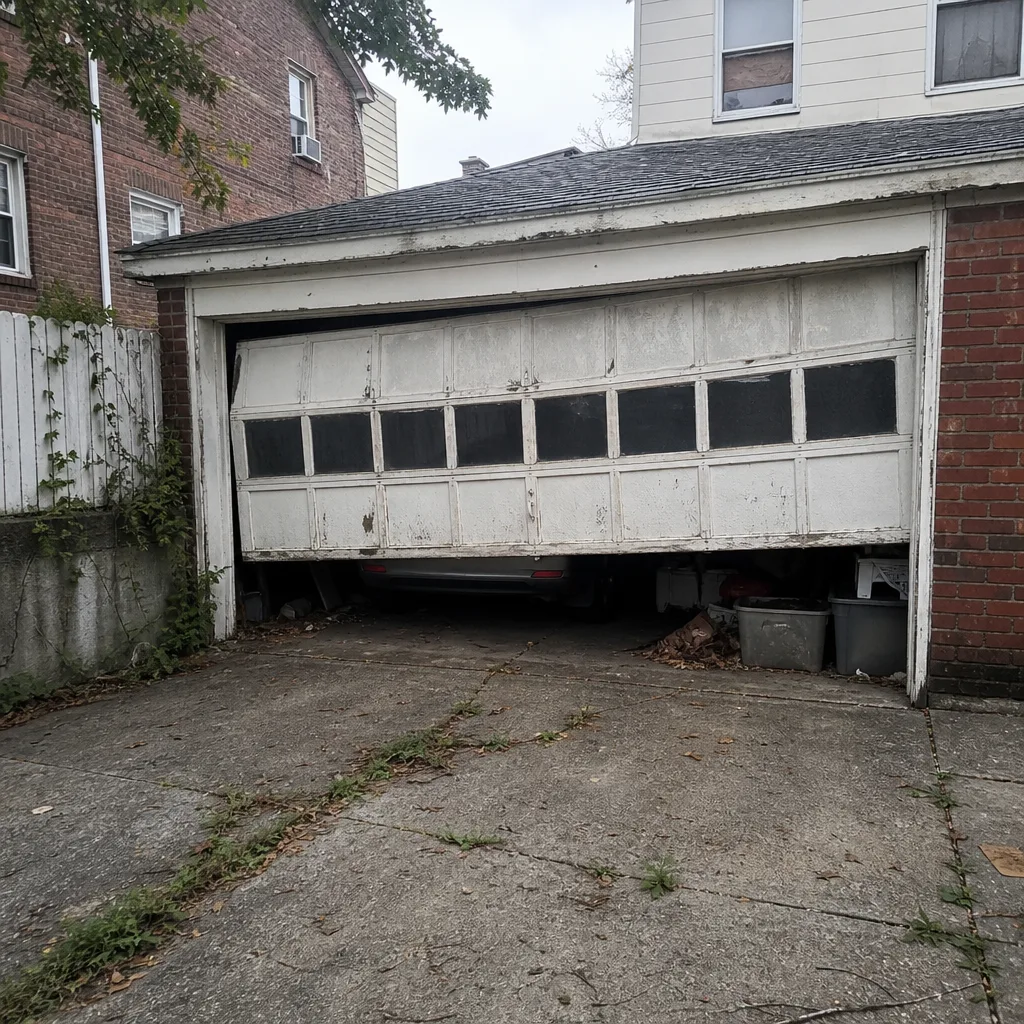 Before
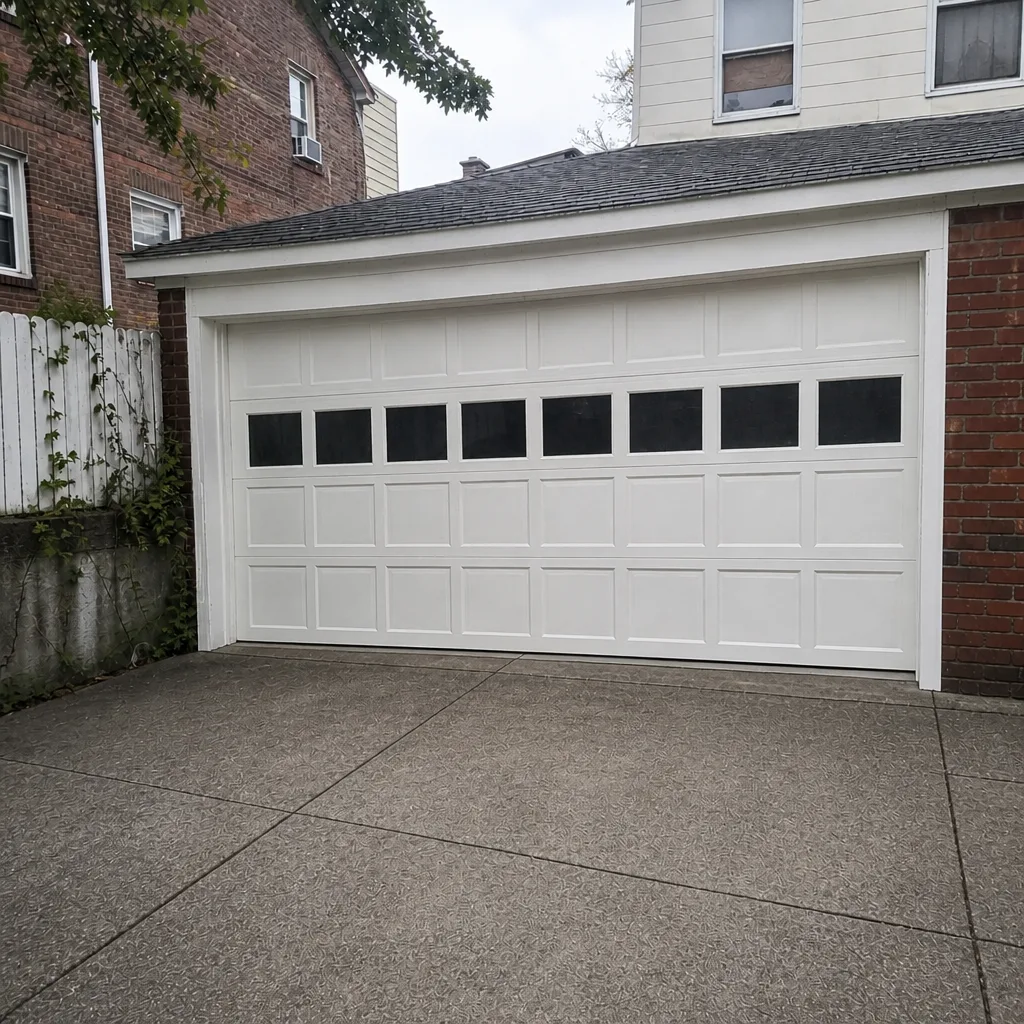 After
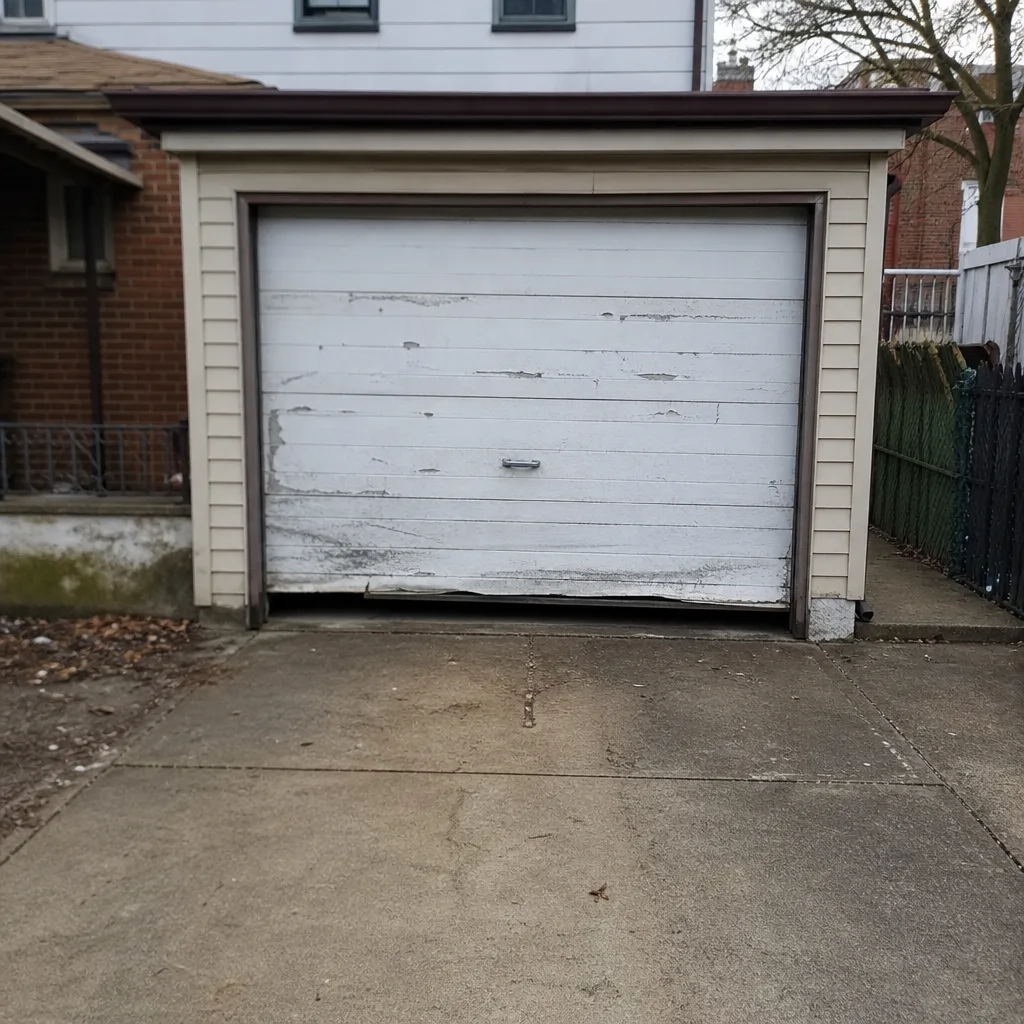 Before
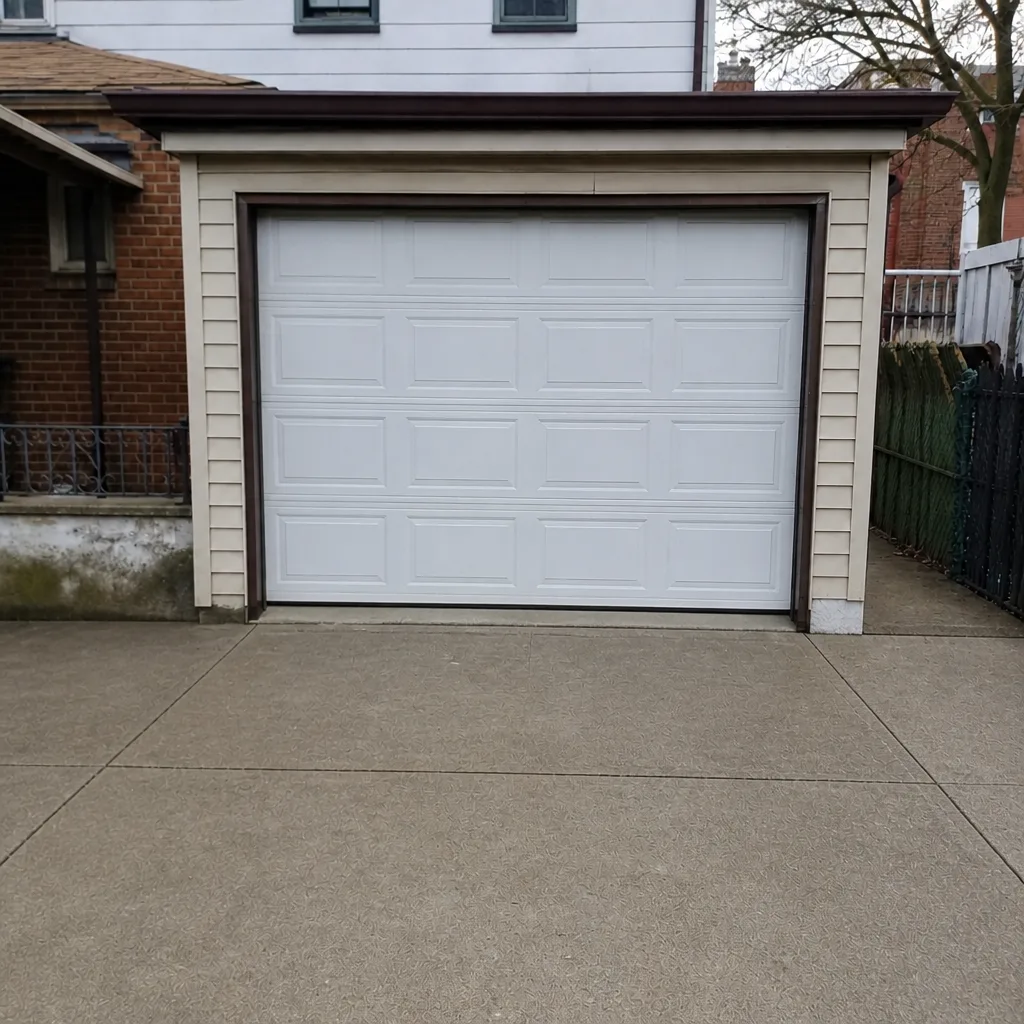 After
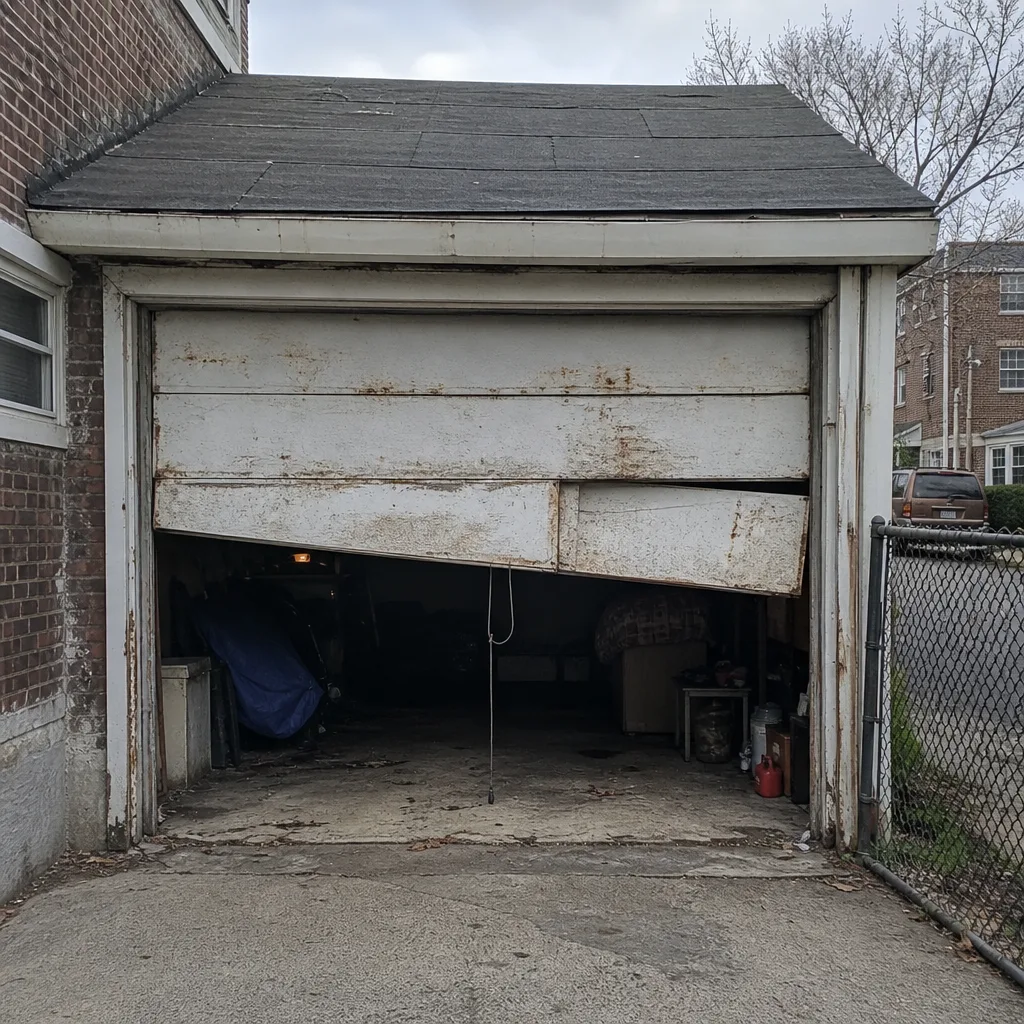 Before
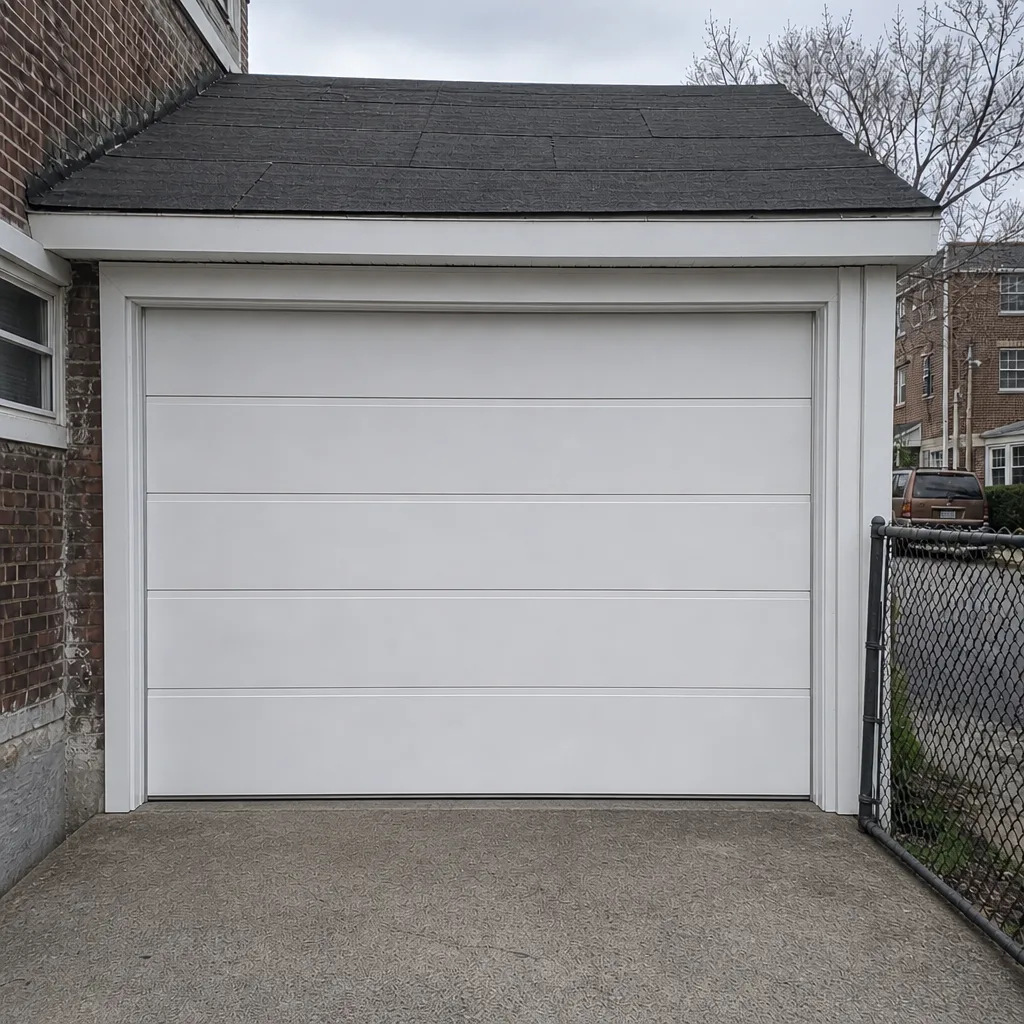 After
When to Call a Professional
Call a professional when the warning signs involve a spring, a cable, a bottom bracket, a door that drops or hangs crooked, or an opener that clicks without moving. Those are the cases where the risk of injury or the risk of a bigger follow-on repair is real. Call when a door fails the manual balance test, when a door reverses before the floor even with the sensors clear, or when a sound has changed from a hum to a pop. Call when you’ve got a door that hesitates for two seconds and you’ve already noticed it twice. If you’re not sure whether your sign is schedule-soon or stop-now, call and describe it. Garage Door Repair Parkchester offers free estimates in Parkchester. Call (866) 966-1056. Our technicians have up to 15 years of experience, and we work on virtually every major brand.
Frequently Asked Questions
The most common first sign is a door that hesitates or feels heavy on the first lift, followed by a loud bang when the spring finally breaks. Before it snaps, a torsion spring often shows a visible gap, and an extension-spring door often starts lifting unevenly. If the door passes visually but hesitates on lift, a balance test with the opener disconnected will usually confirm it. Call (866) 966-1056 for an exact quote; estimates are free.
No. A door with a broken spring should not be operated. The opener is not designed to lift the full weight of the door on its own, and continuing to run it usually causes opener damage in addition to the spring repair. Unplug the opener, don’t use the door, and call us. We answer 24/7, and fast dispatch from 7am to 7pm, Sunday through Friday, is available.
Disconnect the opener with the manual release, lift the door by hand halfway, and let it go. If the door stays balanced and lifts easily by hand, the problem is opener-side (motor, gears, sensors, or travel limits). If the door is heavy, drops, or binds, the problem is the door itself (springs, cables, rollers, or track). Call (866) 966-1056 and describe what you found. Photo estimates are quick.
For repair and emergency calls, same-day service is often possible, and fast dispatch runs from 7am to 7pm, Sunday through Friday. For installation, replacement, and new-door work, the timeline is measured and scheduled, not same-day. Either way, the price is quoted and agreed before any work starts, and the written estimate sets the final price.
Photograph the door from outside and inside, both springs, both bottom brackets with the cables visible, the opener label, and the manufacturer sticker inside the door. Add one line for what you see and one for what you hear. Send them when you call. That set of photos usually tells us the repair before we schedule a visit. Call (866) 966-1056.
Yes. The local pros we connect you with are licensed and insured as their state requires. Our technicians have up to 15 years of experience, and we work on the major brands including LiftMaster, Chamberlain, Genie, Clopay, Amarr, Wayne Dalton, Craftsman, and Raynor. Call (866) 966-1056 for a free estimate on any warning sign you’ve found.
The Bottom Line
Garage door warning signs aren’t random. They follow a sequence, and that sequence gives you a window. A hesitation on lift, a change in sound, a single frayed cable strand, a rusty bottom bracket, a roller that’s cocked in the track, those are a schedule-soon pattern. A loud bang, a snapped cable, a door that hangs crooked, a bottom bracket that’s pulling out of the panel, those are a stop-now pattern. Read the sign, sort it into one of those two columns, and call. For anything that turns out to be a garage door repair, we can usually tell from photos what the job looks like. For the stop-now column, don’t touch the door. Call (866) 966-1056. We answer 24/7. Fast dispatch from 7am to 7pm, Sunday through Friday.
Written by the team at Garage Door Repair Parkchester.